Treatments and Services
Treatments > Injection Therapy
Injection therapy is a non-surgical and natural approach to alleviate pain and accelerate your recovery for a number of common problems that affect muscles and joints.
Harnessing the power of your body’s own platelets, injection therapy promotes the blood’s natural healing properties to effectively treat a variety of orthopedic conditions, including tendon injuries, muscle strains, ligament sprains, and joint inflammation.
Injection therapy is a medical treatment that involves the use of a patient's own blood to reduce pain and promote healing.
The procedure is based on the idea that the concentrated platelets in the plasma contain proteins called growth factors that are involved in the natural development of many tissues, and these factors may help reduce the inflammation associated with osteoarthritis and tendonitis.
The science behind injection therapy for joint and muscle pain demonstrates how platelets, with their inherent healing properties, can effectively relieve pain and promote tissue regeneration. While individual results can vary, some people report much-needed relief after undergoing a series of injection therapy treatments.
In contrast to joint replacement surgeries, which are invasive and alter an individual’s anatomy, injection therapy offers an alternative, non-surgical treatment path that is designed to be as minimally invasive as possible.
Platelets contain anti-inflammatory properties, which play a vital role in alleviating joint pain. Inflammation is a common factor in many joint conditions, such as osteoarthritis or tendinitis. By mitigating inflammation, injection therapy can help reduce pain, swelling, and stiffness in the joints.
Injection therapy can be employed to address sports-related injuries such as pulled muscles, joint sprains or ligament tears. Many famous athletes have received injection therapy for various conditions typically treated with medications, physical therapy, or even surgery.
Injection therapy may also be used to help speed up the healing of muscles, tendons and ligaments after surgery, as procedures on these tissues have notoriously long recovery times.
Injection therapy for joints and muscle is associated with several potential benefits, and its use has gained popularity as a treatment option in orthopedics.
Every patient is different, but multiple studies suggest that injection therapy may promote a longer-lasting recovery from an injury than some other treatments.
The injection is derived from the patient’s own blood, minimizing the risk of allergic reactions or rejection. It is a surgery-free method that focuses on healing and pain reduction using elements found naturally in your body.
Your Journey to Holistic Health Begins Within.
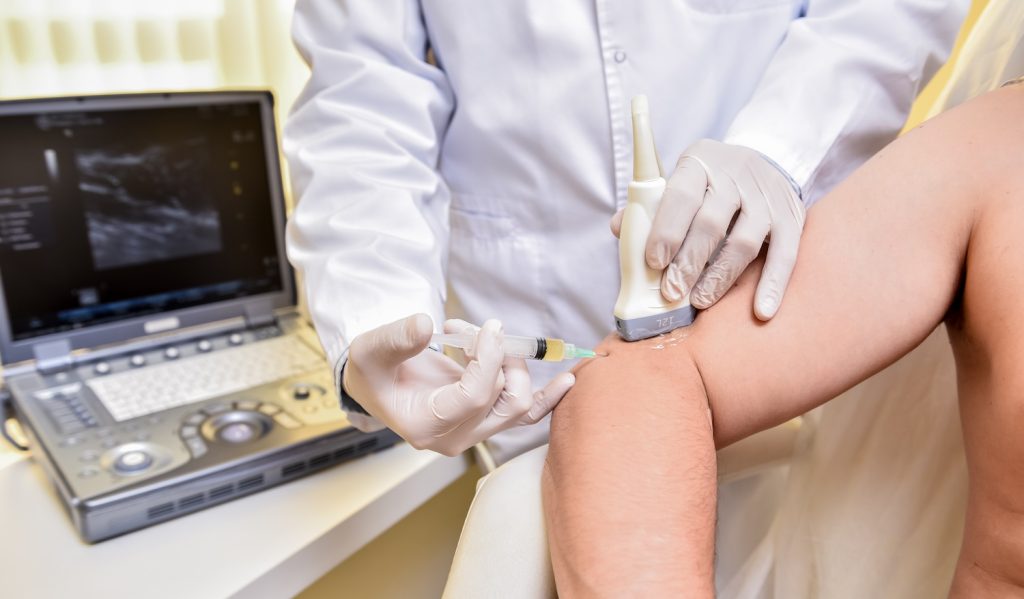
The injections are given as soon as the blood has been spun and the platelets separated. Numbing medication may be applied sparingly around the injection site to offset any discomfort or pain from the injection. The portion of concentrated platelets is then injected into the site of injury with ultrasound guidance.
After the application, the treated area is usually massaged or manipulated to ensure even distribution of the injection. Post-treatment care instructions, which may include avoiding sun exposure and certain skincare products, are provided.
People may choose to undergo injection therapy for joints and muscle for various reasons, often after exhausting other conventional treatment options.
Patients who haven’t responded well to other treatments to overcome ongoing pain, stiffness, limited range of motion, sleep trouble and other limitations can benefit from injection therapy. By targeting affected joints with injection therapy, patients experience reduced pain and improved joint function due to increased collagen production and cartilage regeneration.
Athletes often turn to injection therapy to speed up recovery from sports-related injuries such as tendonitis or ligament tears. Placing platelet-rich plasma directly into these damaged tissues can help improve blood flow and reduce pain and inflammation while promoting tissue regeneration.
Integrating injection therapy with surgical interventions can enhance the healing process and potentially improve surgical outcomes. Injection therapy may be used before or after surgery to promote tissue healing, reduce inflammation, and support a faster recovery.
Results from injection therapy for joints and muscle vary among individuals. The body heals itself and organizes new tissue in 2-6 weeks. However, the best results may take up to 3-4 months. During this time, the treated areas become stronger, more resilient, and, importantly, less painful. Keep in mind that severe injuries might take a bit longer to respond to the treatment.
Injection therapy typically involves 2 to 3 injections for the treatment of joints and muscles. These injections are administered approximately 3 to 4 weeks apart, or as advised by your doctor. Improvement is often observed starting from the third week onward.